


Senior School


Overview
The Senior School at Indraprastha Global School represents the culmination of a learner’s academic journey, where knowledge evolves into expertise, and aspiration transforms into purposeful direction. Aligned with the progressive framework of the National Education Policy 2020, the curriculum is designed to balance academic excellence with future readiness, empowering students to make informed choices, pursue specialized pathways, and emerge as confident contributors in a rapidly evolving global landscape.


Curriculum Overview
Academic Rigour with Conceptual Mastery
The curriculum follows the CBSE framework while transcending conventional boundaries through a strong emphasis on:
- Deep conceptual clarity
- Analytical and application-based learning
- Interdisciplinary connections
Learners are guided to move beyond rote memorization towards higher-order thinking, ensuring strong performance in board examinations while building enduring academic foundations.
Stream Specialization & Career Pathways
At the Senior Secondary level, students are offered thoughtfully curated subject combinations across:
- Science
- Commerce
- Humanities
The programme is designed to align with individual aptitude and aspirations, supported by:
- Career guidance and counselling
- Exposure to emerging fields and professions
- Skill-based subject choices in line with NEP recommendations
This enables learners to make informed academic and career decisions, preparing them for higher education in premier institutions worldwide.
Teaching Methodology
Future-Ready Competencies
In an era defined by change and innovation, the curriculum integrates essential 21st-century competencies, including:
- Critical thinking and problem-solving
- Research and inquiry skills
- Digital fluency and technological adaptability
- Creativity, innovation, and design thinking
Students are encouraged to undertake research projects, presentations, and collaborative assignments that mirror real-world challenges and expectations.
Global Exposure & Experiential Learning
The Senior School experience extends beyond the classroom through:
- Model United Nations (MUN) and global forums
- Interdisciplinary projects and experiential modules
- Leadership platforms and student-led initiatives
Such opportunities cultivate global awareness, perspective-taking, and confident articulation, enabling learners to engage meaningfully with complex global issues.
Leadership, Agency & Personal Growth
IPGS places strong emphasis on developing self-driven, responsible leaders. Through:
- Student leadership roles
- Public speaking and presentations
- Collaborative initiatives
Learners build confidence, resilience, and a strong sense of identity, preparing them to navigate academic and life challenges with clarity and purpose.
Well-being, Values & Ethical Responsibility
In alignment with holistic education, the curriculum integrates:
- Emotional well-being and mindfulness
- Ethical reasoning and social responsibility
- Empathy, inclusivity, and integrity
Students are nurtured to become not only high achievers but also grounded, compassionate individuals who contribute meaningfully to society.
Assessment
At the Senior School level, assessment at Indraprastha Global School is both rigorous and reflective, designed to prepare learners for academic excellence while nurturing higher-order thinking and real-world readiness. Aligned with the vision of the National Education Policy 2020, the approach integrates competency-based evaluation with board examination preparedness, ensuring a balanced and holistic academic experience.
Assessment practices extend beyond conventional written examinations to include:
- Analytical assignments and case-based studies
- Research projects and presentations
- Subject enrichment activities
- Practical and experiential evaluations
Continuous and comprehensive feedback enables students to refine their understanding, strengthen performance, and develop exam readiness with confidence and clarity.
The framework focuses on:
- Conceptual depth and application
- Analytical and evaluative thinking
- Time management and exam strategy
- Independent research and articulation
This approach ensures that learners are not only well-prepared for board examinations but also equipped with the skills, discipline, and intellectual maturity required for higher education and future careers.
Outcome: The IPGS Graduate
An IPGS Senior School graduate emerges as:
- Academically accomplished and intellectually agile
- Career-ready with clarity of purpose
- Emotionally balanced and ethically grounded
- A confident global citizen prepared for higher education and beyond
Choosing Indraprastha Global School signifies an investment in a future-ready, intellectually rigorous, and values-driven education. Anchored in the vision of the National Education Policy 2020, the curriculum cultivates critical inquiry, interdisciplinary understanding, and real-world application. Learners develop not only academic excellence but also emotional intelligence, ethical awareness, and global perspective. Through experiential learning, leadership opportunities, and innovation-led practices, students evolve into confident, reflective, and self-directed individuals. IPGS nurtures agency, resilience, and purpose; equipping every learner to excel in higher education and contribute meaningfully to an ever-evolving world with clarity, competence, and conviction.
Our university offers a comprehensive range of academic programs designed to inspire learning, innovation and real-world impact Each program is carefully crafted to blend theoretical knowledge with practical experience ensuring students gain the skills needed to excel in today’s competitive global environment From foundational undergraduate courses to advanced postgraduate and professional degrees our curriculum emphasizes critical thinking hands-on learning, and industry relevance With guidance from experienced faculty access to modern laboratories and opportunities for research and internships students are empowered.
Program Highlight
Faculty
Education
Duration
4 Years
Credits
60
Language
English
About Programs
Lorem ipsum dolor sit amet, consectetur adipiscing elit, sed do eiusmod tempor incididunt ut labore et dolore magna aliqua. Ut enim ad minim veniam, quis nostrud exercitation ullamco laboris nisi ut aliquip ex ea co mmodo consequat. Duis aute irure dolor in reprehenderit in voluptate velit esse cillum dolore eu fugiat nulla pariatur Placerat orci nulla pellentesque dignissim enim sit venenatis urna. Orci porta non pulvinar neque laoreet suspendisse interdum consectetur libero. Ipsum suspendisse ultrices gravida dictum fusce. Consectetur libero id faucibus nisl et. Suspendisse in est ante in mauris cursus mattis.
Master of Science in Statistics (24 Months)
Session: 2025 - 2026
Typical Program Structure
A 24-month M.S. Statistics program usually follows a structure split across three or four academic terms (e.g., two semesters plus a summer term, or three quarters plus a summer term).
- Duration: 24 Months (Full-Time)
- Total Credits: Varies by institution (e.g., 60-90 credits).
- Structure: Heavily focused on taught coursework and often culminates in a capstone project or dissertation completed over the summer.
Core Curriculum Topics
Statistical Theory
- Theory of Statistical Inference, Advanced Probability Theory, Foundations of Statistics
Statistical Modeling
- Linear Models and Regression Generalized Linear Models, Multivariate Analysis.
Computational Statistics
- Statistical Programming (e.g., R and Python), Statistical Computing, Data Management
Applied Methods
- Time Series Analysis, Design and Analysis of Experiments, Sampling Theory
Modern Techniques
- Statistical Machine Learning, Advanced Statistical Learning, Data Science Methods

Curriculum Overview
Our university curriculum is designed to deliver a balanced future-focused learning experience that empowers students with both academic knowledge and practical competencies Each program is structured to combine foundational coursework specialized major subjects hands-on learning and interdisciplinary opportunities By integrating theory research and real-world applications we prepare students to excel in a rapidly evolving global environment Students begin with core courses that build essential skills in communication, critical thinking, digital literacy, and quantitative analysis.
Curriculum Breakdown Summary
Our curriculum is structured to provide a well-rounded, progressive learning journey that supports both academic excellence and practical skill development. It is organized into four key components: Core Courses, Major Requirements, Electives, and Experiential Learning.
| Regular Students | Required Credits |
|---|---|
| Core Courses | 30 Credits |
| Science (S) Core | 30 Credits |
| Business (B) Core | 3 Credits |
| GPA | 3 Credits |
| Total | 90 Credits |
Core Courses
The Science (S) Core develops a strong foundation in scientific principles, analytical thinking, and evidence-based problem-solving These courses introduce students to the fundamental concepts of the natural world while strengthening their abilities to observe, experiment.
| Semester 1 | Courses Code | Core Courses | Credits |
|---|---|---|---|
| Foundations in Communication & Critical Thinking (12 Required Credits) | IBS301 | International Business Management | 3 Credits |
| BUS109 | Introduction to Microeconomics | 3 Credits | |
| MKT200B | Principles of Marketing | 3 Credits | |
| BUS308B | Strategic Management | 3 Credits | |
| Accounting | BUS325B | Introduction to Operations Management & Decision Science | 3 Credits |
| FIN305 | Introduction to Corporate Finance | 3 Credits | |
| BUS110 | Introduction to Macroeconomics | 3 Credits | |
| ACC101 | Introduction to Accounting | 3 Credits | |
| Management | BUS100A | Introduction to Business | 3 Credits |
| BUS211C | People and Organization | 3 Credits |
Science (S) Core
The Science (S) Core develops a strong foundation in scientific principles, analytical thinking, and evidence-based problem-solving These courses introduce students to the fundamental concepts of the natural world while strengthening their abilities to observe, experiment.
| Semester 2 | Courses Code | Science | Credits |
|---|---|---|---|
| Science | PHY 101 | Conceptual Physics | 3 Credits |
| BIO 105 | Introduction to Life Sciences | 3 Credits | |
| PHY 101 | Introduction to Physical Science | 3 Credits | |
| ENV 110 | Environmental Science | 3 Credits | |
| Technology | CS 101 | Digital Foundations and Applied Programming | 3 Credits |
| TECH 205 | Management Information Systems (MIS) | 3 Credits | |
| ENGR 100 | Introduction to Engineering Principles | 3 Credits | |
| DATA 210 | Data Management and Visualization | 3 Credits | |
| Mathematics | MATH 115 | College Algebra and Trigonometry | 3 Credits |
| STAT 201 | Probability and Statistics | 3 Credits |
Business (B) Core
The Business Core, requiring 30 credits (typically eleven 3-credit courses), is the largest component of the foundational curriculum. It ensures students gain a comprehensive, interdisciplinary understanding of the functional areas necessary to operate and manage an organization.
| Semester 3 | Courses Code | Business Core | Credits |
|---|---|---|---|
| Finance | IBS301 | International Business Management | 3 Credits |
| BUS109 | Introduction to Microeconomics | 3 Credits | |
| MKT200B | Principles of Marketing | 3 Credits | |
| BUS308B | Strategic Management | 3 Credits | |
| Accounting | BUS325B | Introduction to Operations Management & Decision Science | 3 Credits |
| FIN305 | Introduction to Corporate Finance | 3 Credits | |
| BUS110 | Introduction to Macroeconomics | 3 Credits | |
| ACC101 | Introduction to Accounting | 3 Credits | |
| Management | BUS100A | Introduction to Business | 3 Credits |
| BUS211C | People and Organization | 3 Credits |
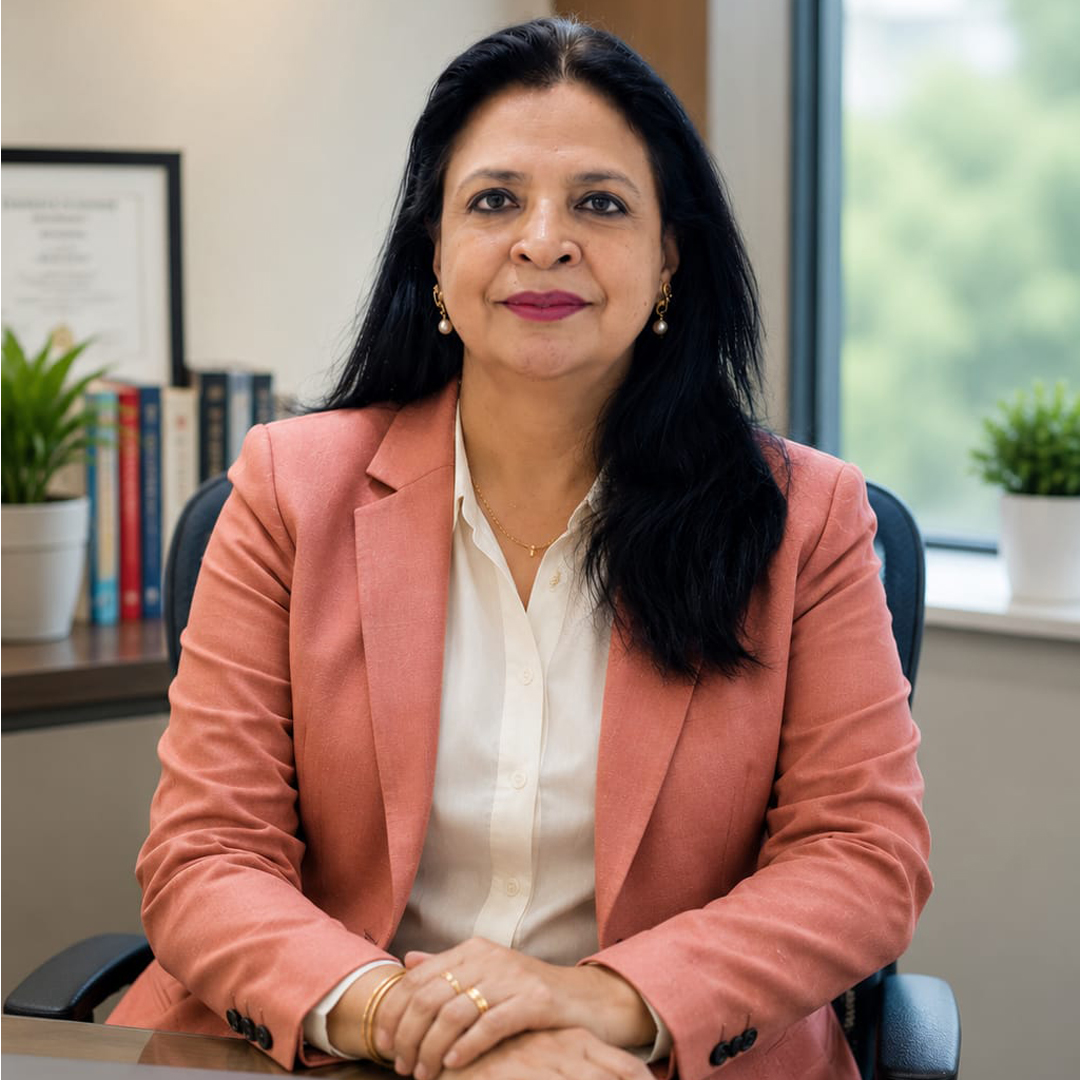
Ms. Alka Sharma
Vice Principal (Senior School)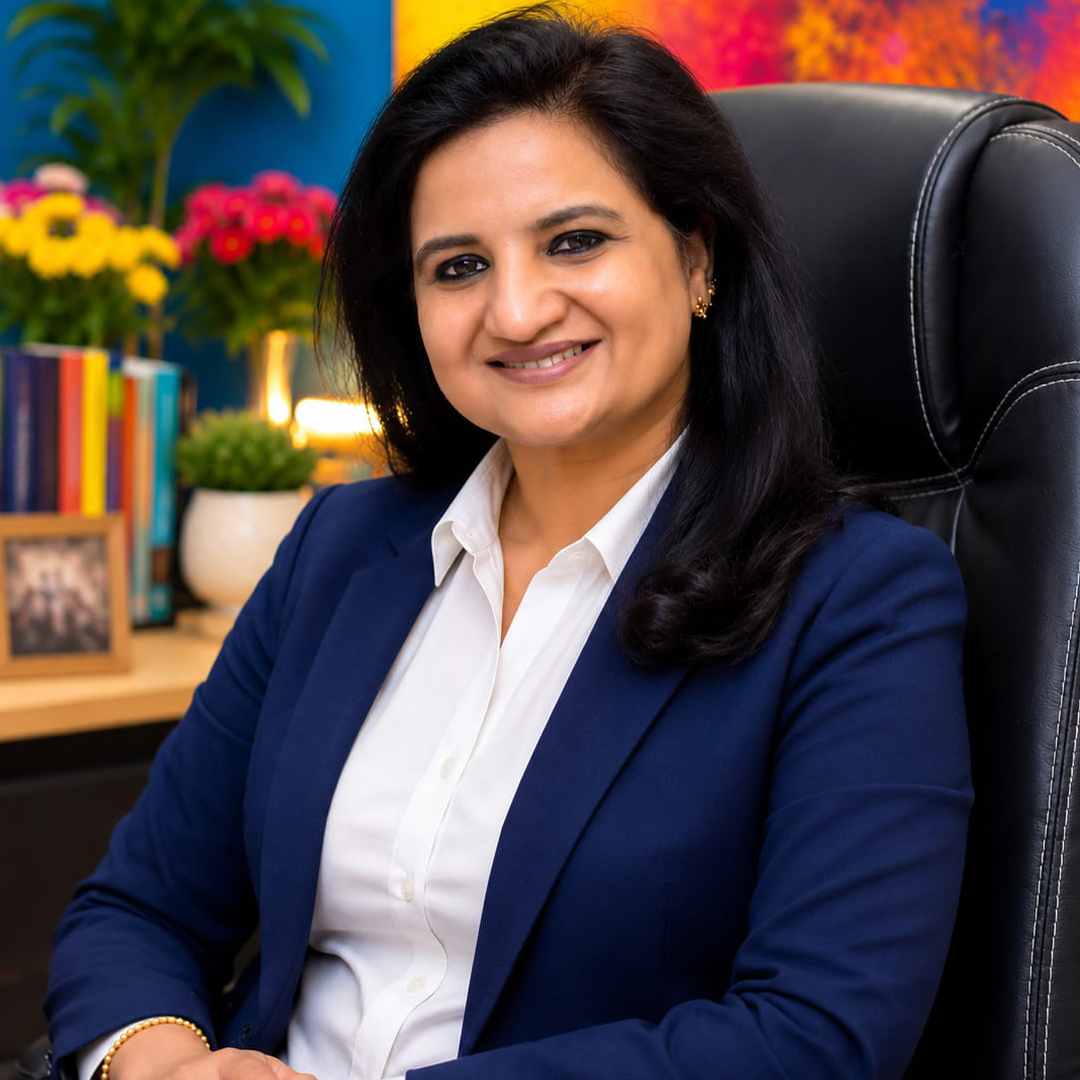
Ms. Vinita Maheshwari
Vice Principal (Primary School)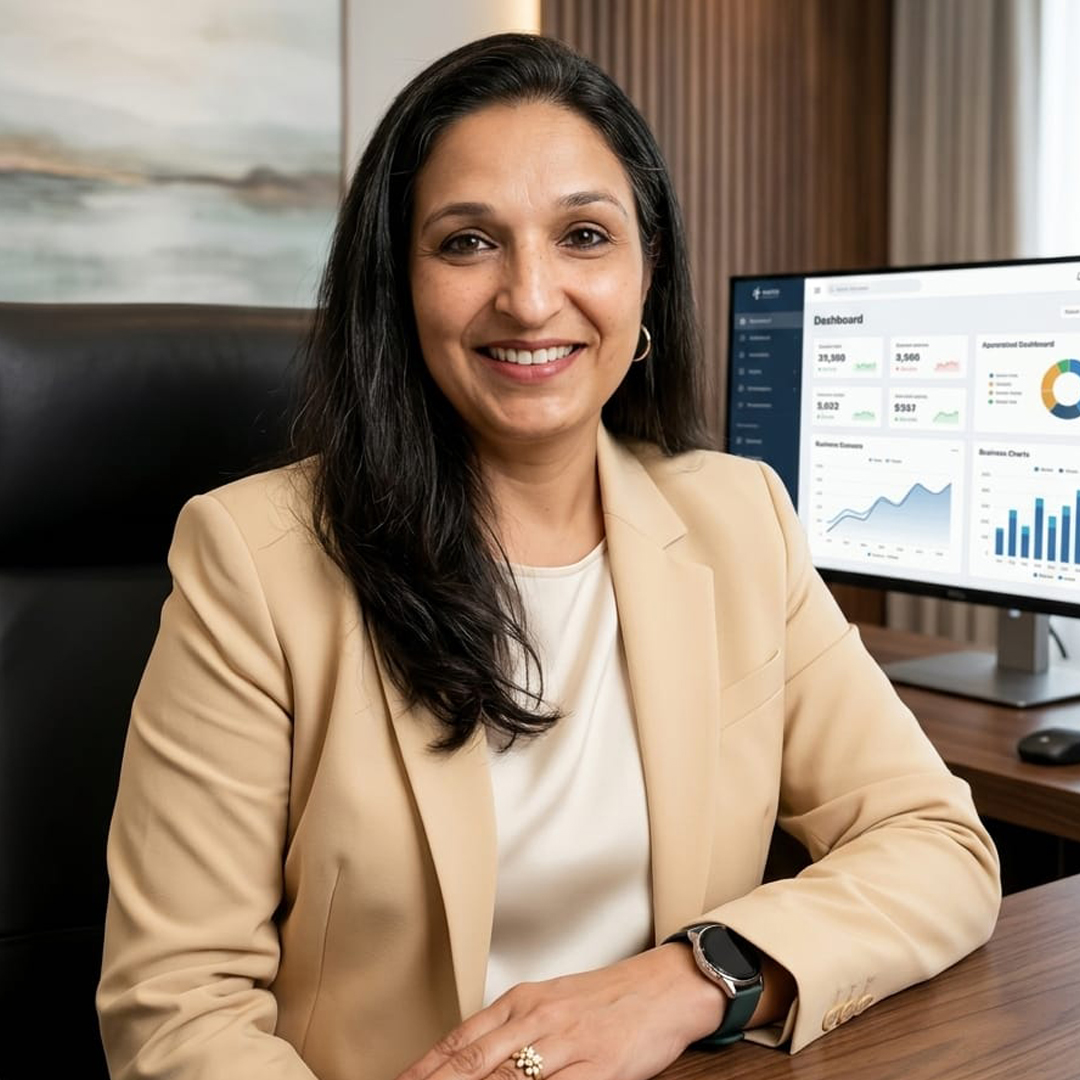
Ms. Lavanya Karthikayan
Headmistress (Foundational Years)Programs Cost
Our program costs are designed to remain transparent competitive and accessible for students from diverse backgrounds. Each academic program includes tuition fees, registration charges and essential learning resources ensuring students receive high-quality education and comprehensive academic support Costs may vary based on program type, course load, and mode of study (on-campus, hybrid, or online) We aim to provide exceptional value through modern facilities, expert faculty, and industry aligned curriculum making your investment in education both meaningful and future-focused.
| Spring 2025 | Summer 2025 | Fall 2025 | Winter 2025 | Annual | |
|---|---|---|---|---|---|
| 17 weeks | 6 weeks Summer 1 3 Weeks Summer 2 3 Weeks | 16 weeks | 17 weeks Winter 1 3 Weeks Winter 2 3 Weeks | Costs USD | |
| Enrollment Fee (Onetime fee) | $560 | $560* | $660 | ||
| Orientations Fee (Onetime fee) | $159 | $159* | $159 | ||
| Medical Insurance (Yearly) | $68 | $68 | |||
| Tuition | $4,129 | $1,139 | $5,138 | $1,028 | $11,434 |
| Residence | $728 | $364 | $728 | $364 | $2,184 |
| Breakfast Fee | $448 | Not offered | $448 | Not offered | $896 |
| Activity Fee | $100 | $100 | $200 | ||
| Total Fast Year | $6,192 | $1,503 | $7,133 | $1,392 | $16,220 |
| Total Second Year | $5,192 | $1,503 | $7,133 | $1,392 | $15,220 |
Apply Now
Our program costs are designed to remain transparent competitive and accessible for students from diverse backgrounds. Each academic program includes tuition fees, registration charges and essential learning resources ensuring students receive high-quality education and comprehensive academic support Costs may vary based on program type, course load, and mode of study (on-campus, hybrid, or online) We aim to provide exceptional value through modern facilities, expert faculty, and industry aligned curriculum making your investment in education both meaningful and future-focused.


Requirements and Deadlines
Our program costs are designed to remain transparent competitive and accessible for students from diverse backgrounds. Each academic program includes tuition fees, registration charges and essential learning resources ensuring students receive high-quality education and comprehensive academic support Costs may vary based on program type, course load, and mode of study (on-campus, hybrid, or online) We aim to provide exceptional value through modern facilities, expert faculty, and industry aligned curriculum making your investment in education both meaningful and future-focused.
Admissions Requirements
1. Academic Qualifications
- Completed secondary education (HSC/A-Level/Equivalent).
- Minimum GPA/grade requirements as set by the university.
- For graduate programs: a recognized bachelor’s degree with required CGPA.
3. English Language Proficiency
- TOEFL, IELTS, PTE, or equivalent test score
- University-approved English placement test (if applicable)
5. Additional Requirements (Program-Specific)
- Portfolio (Architecture, Design, Fine Arts)
- Coding/technical assessment (Computer Science, IT)
- Work experience (MBA, Professional Degrees)
- Research proposal (Master’s/PhD)
7. Visa Requirements (International Students)
- Valid passport
- Offer letter from the university
- Financial sponsorship documents
- Medical clearance (if applicable)
2. Academic Qualifications
- Completed application form
- Academic transcripts & certificates
- National ID/Passport
- Recent passport-sized photographs
- Proof of English proficiency (if required)
- Recommendation letters (for graduate admissions)
- Statement of Purpose/Personal Essay (selected programs)
4. Entrance Exam / Interview
- Some programs require an entrance exam or aptitude test
- Selected applicants may be invited for an admission interview
6. Financial Requirements
- Payment of application fee
- Proof of ability to cover tuition and living costs (for international students)


Application Deadlines
| Program Level | Adnations Session | Applications Opens | Appellation Deadline | Classes Begin |
|---|---|---|---|---|
| Undergraduate | Spring Intake | October 1 | December 15 | January 10 |
| Undergraduate | Fall Intake | April 1 | July 30 | September 1 |
| Postgraduate | Spring Intake | October 1 | December 30 | January 15 |
| Postgraduate | Fall Intake | April1 | August 10 | September 5 |
| International Students | All Intake | 6 Month Before | 2 Months Before | As Scheduled |
Requirements and Deadlines
Our program costs are designed to remain transparent competitive and accessible for students from diverse backgrounds. Each academic program includes tuition fees, registration charges and essential learning resources ensuring students receive high-quality education and comprehensive academic.